I’m speechless for a moment with stage fright.
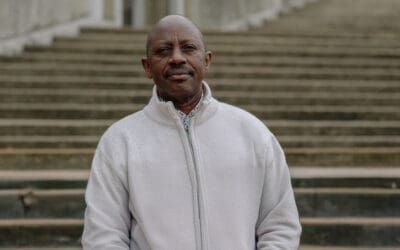
Pastor Robert, one of the men I came to interview, had just asked me: “Why are you here?”
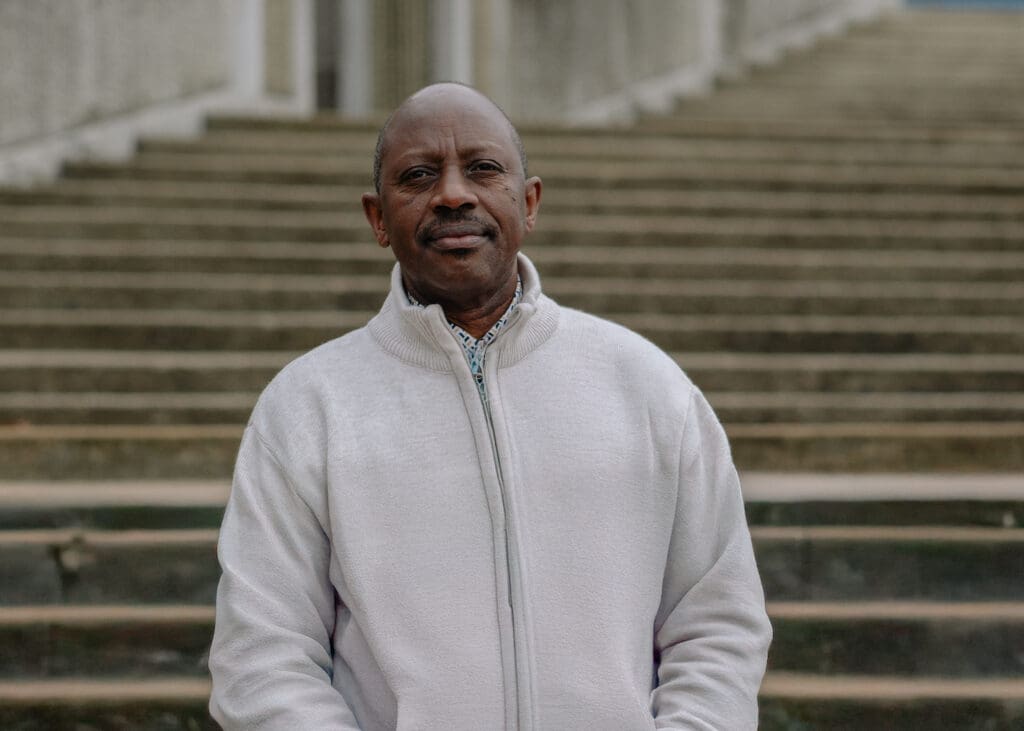
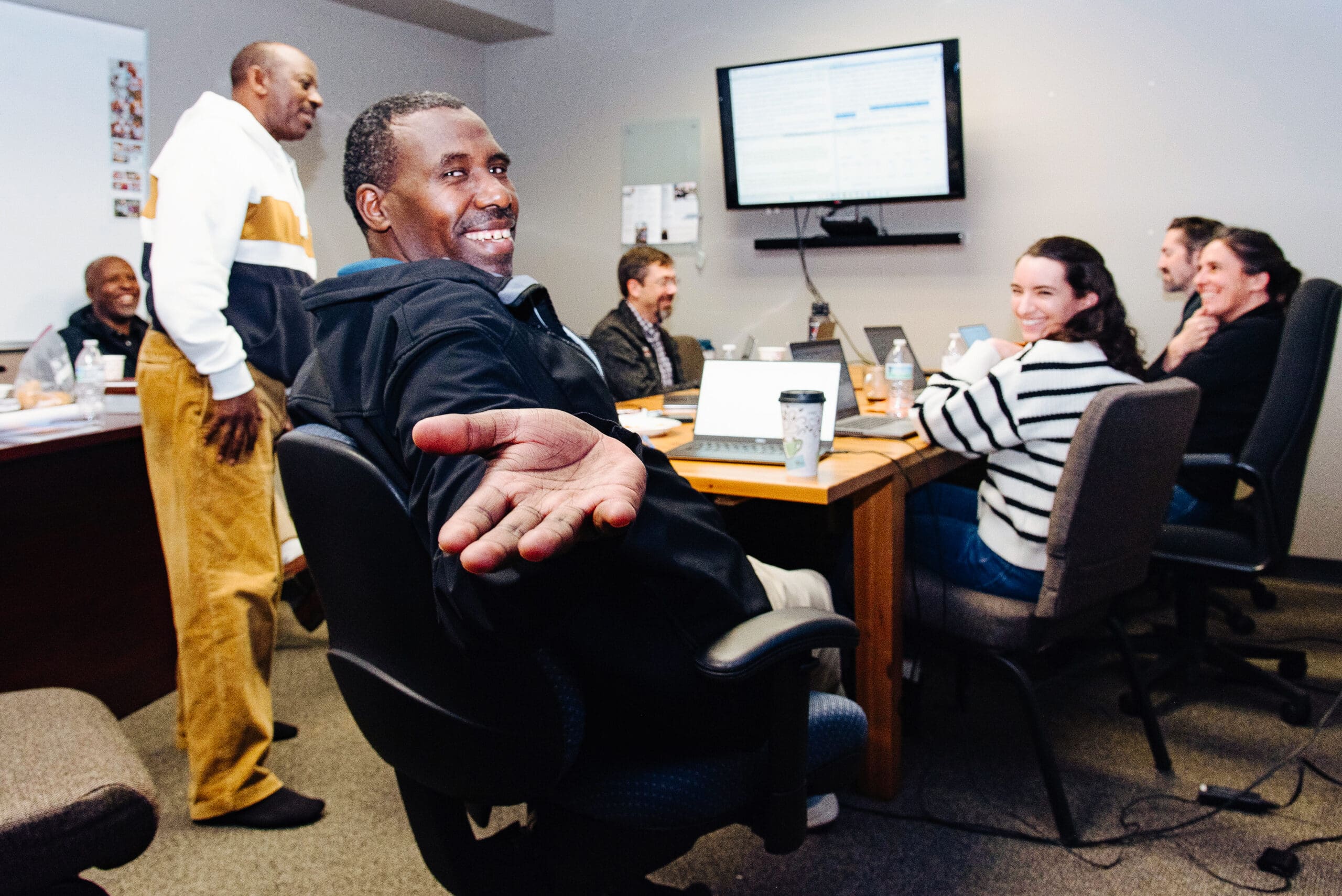
I had just followed my fellow writing intern Rebecca into the office and sat down across from Pastor Philemon, Pastor Tito, and Pastor Robert at the conference table. These men are Banyamulenge, an African people group living as refugees in the U.S. because of ethnic cleansing being carried out against them in their homeland.
They are in the middle of a project translating the book of Matthew into their own language, Kinyamulenge. Matthew is the third book of the Bible they are working on, and Rebecca and I have come to interview them about their progress.
Pastor Robert leans forward, hands folded on the conference table. “We’ve received many visitors who have asked about the translation project and how it came together. But I think you are the first to interview deeply about the Kinyamulenge project and the impact it has on our culture, on our community, and on us personally.” He pauses for a beat. “What is the purpose?”
The question is very focused and comes from a quiet man who seldom speaks. It is an important and intentional question if it is worth it to him to speak up and ask it.
I freeze, but Rebecca answers without hesitation. “We’re trying to tell people what you’re doing so that potential teammates and the people who are sending money will know how to help.”
As Rebecca speaks, all three pastors start smiling and chuckling.
“Nice.”
“Wow.”
“Thank you.”
“Thank youuuu. Thank you,” Pastor Robert answers.
The pastors are honored that someone has taken the time to travel from Dallas to Louisville to meet them and talk with them about their project and their culture. They are pleased to talk about the translation work they’re doing, but they are even more eager to share their stories and talk about who they are as Banyamulenge. It is a joy for them to feel sincerely listened to and to know that their stories and work will be shared with others, that it will not go unseen.
The pastors are so pleased and grateful that someone is listening and asking questions.
* * *
Debora is one of thousands of Banyamulenge living in the U.S. because of the genocide in the Democratic Republic of Congo. She sits on the couch across from me, elbows resting on her knees as she leans forward.
“Believe me,” Debora says solemnly, “the scars are so deep. Some of them are not scars, they are still very fresh wounds.”
For a brief moment, even her three toddlers grow quieter.
This is a woman who has never lived in her homeland. Her people have fled for their lives and are scattered across the world. They are being targeted simply because they are Banyamulenge. Everything around them pressures them to identify as something other than who they are.
“Women in Africa carry our babies on our backs,” she describes. “The way we Banyamulenge carry our babies is different from the way Kenyans carry theirs.
“Most Kenyans carry their babies by tying their shawls across one shoulder and the chest so one shoulder is not free. But Banyamulenge wrap their shawls across the chest, with both shoulders free.” She borrows my phone and spends several minutes searching and describing images on Google to illustrate.
“You see the difference here?” She puts the phone down and touches me lightly on the shoulder and the back as she demonstrates how she would tie a baby-carrying shawl around my own body.
She emphasizes the distinction between the Kenyan style and the Congolese style several times. “I don’t know if you see it,” she insists gently. “I’d like you to really see the difference.”
“I’d like you to really see.”
I look closely at the pictures and mimic her motions. “I think I see.”
She does not seem entirely convinced, but she sits back and resumes telling the anecdote she’d begun before. “I remember one Congolese lady, not even Banyamulenge but another Congolese, and she and her family were refugees in Kenya as well. I saw the lady carry her baby the Kenyan style, but I knew she was Congolese. So I asked, ‘How come she’s carrying her baby like that?’
“Her mom told me, ‘It’s better if we carry our kids the same way the Kenyans do so that we do not draw any attention to the fact that we are foreigners. We cannot change our accent, we cannot change our story, but at least … we keep the attention to a minimum.’”
The Banyamulenge have had to learn to blend in, hide their differences, and try to avoid drawing hostile attention. They have been disowned by their home country and targeted for personal and violent genocide with a personal, intentional hatred they do not understand.
They have been told that their language — a core part of their identity — is not a language at all, just a dialect of another language. Often, the people in the countries they flee to for refuge treat them with derision, insult them, and call them racial slurs.
Over and over again, the Banyamulenge are told through word and action that they do not and should not exist. When everything around them is telling them that their culture does not exist, it is difficult not to internalize that message and believe that they don’t matter.
The Banyamulenge are forced to hide their identities and are devalued both as an ethnic group and as human beings.
* * *
In 2019, the Banyamulenge pastors Philemon, Tito, and Robert, along with Pastor Victor, who had envisioned the project, began partnering with Pioneer Bible Translators to translate the Bible into their own language. It was a project that Victor had been praying about and working toward for almost 40 years.
The process is far slower and more meticulous than they had anticipated. “When we started the project, we didn’t know how translation works,” explains Tito. “We were thinking that you can just write …” He mimes rapid, blurred scribbling with a pen. “Just changing the words.”
But Bible translation is much more complex than simply swapping out one word for another. “It came hard for us,” he admits. “Now we understand that having the Bible is not easy.”
He thinks back on the translation training they did before beginning the project, where it was impressed upon them how critical it was to translate the Bible accurately. “They said that the Word of God is translated carefully,” he continues. “They cannot allow any mistake.
“That’s what we’re doing,” Tito says intently. “Discovering that was very nice for us, for our heart.”
Throughout the translation project, the Banyamulenge are seeing their language — their identity — being treated just as seriously as any other language the Bible has been translated into. The Kinyamulenge language isn’t treated sloppily, as if it is a lesser language or as if the quality of the translation matters less in Kinyamulenge.
It is being treated carefully and with great concern for errors. The process of translation dignifies the language, validates it, and demonstrates care for it. That speaks to the Banyamulenge translators’ hearts as much as reading the Bible in their language.
Translating the Bible into Kinyamulenge is first and foremost about getting Scripture in their own language, but to the Banyamulenge, it is far more than that. Because their culture is traditionally an oral culture, they didn’t have any books or even an alphabet in their language until the four Banyamulenge pastors began the translation project. Their first complete translation — the Gospel of Luke — is the first book ever written in Kinyamulenge.
“It gives a sense of validation to our identity,” Tito’s niece Evelyne declares. “It is an affirmation that we are a people.”
“It is an affirmation that we are a people.”
Having their first Kinyamulenge literature was a moment of victory and affirmation for the Banyamulenge people.
“We’re humans like anybody else,” adds Reponse, a young Banyamulenge man. “Having literature in our language is giving us a voice at the world stage and recognizing who we are as a people. It’s a way for us to be recorded in the history books, which was not the case before.”
A Bible written in Kinyamulenge is concrete, tangible proof of the Kinyamulenge language and the Banyamulenge culture. It sends a new message to the Banyamulenge people: Here is undeniable, concrete proof that you do exist. You are seen. You matter.
The Kinyamulenge Bible translation is a concrete validation before the world of the Banyamulenge’s humanity and culture.
* * *
The Banyamulenge are so eager for a chance to be acknowledged and listened to rather than persecuted, invalidated, or forgotten by other people. The translation of the Bible into their language gives them that chance. But even more importantly, the translation project is a demonstration of God’s love for them in action.
Through the translation process, the Banyamulenge are seeing God’s love in action.
“This project will have a lot of ripple effects,” says Reponse. “It’s going to have a lot of impact on us, the Banyamulenge, around the world, in ways that we can’t fully understand yet. This project is way bigger than we think it is, and I’m excited to see where it takes us.”
The Kinyamulenge translation project is only just beginning. But already it is uplifting and strengthening the Banyamulenge identity and church as their culture and language are preserved in writing. It is a doorway for the Lord to meet their people where they are and show them in a tangible way that He sees them. He created them intentionally. He created them to be a unique people. They matter to Him.
Bible translation has a lasting impact that reaches beyond providing Bibles. It shows God’s love in a way that cuts to the core of a people group’s identity.
* * *
See for yourself the excitement of the Banyamulenge people in these short videos: